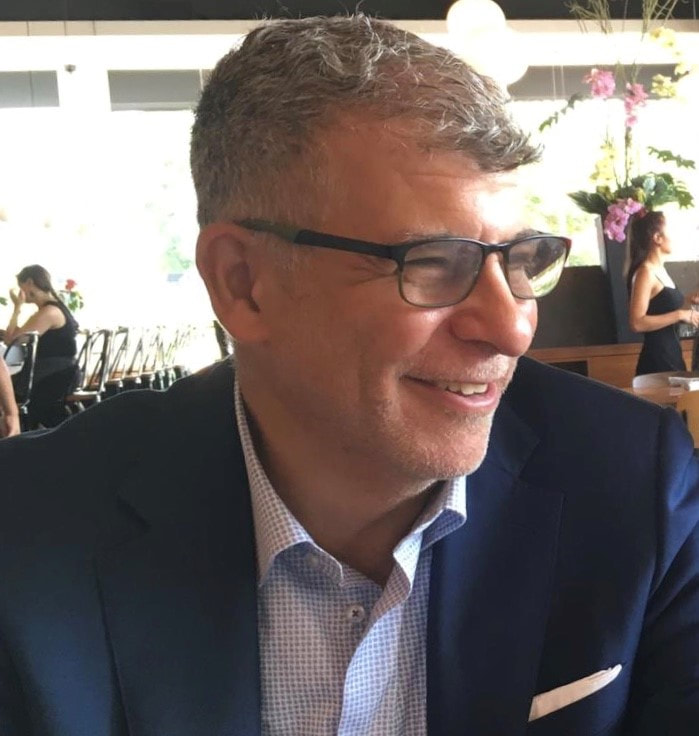
SALAH D. HASSAN
|
Salah D. Hassan was born and raised in London, Ontario. He graduated from H.B. Beal Secondary School located in London’s east end, just two blocks from the Embassy Hotel. From 1977 until 1984, he worked in several restaurants in London, including the Café du Midi, the Black Swan Bakery, and the Auberge de Petit Prince. In 1981, Salah traveled with Ron Benner to Mexico and spent several months in the village of Ajijic, the hometown of a family friend Jesus Higuera. A few years later, in the summer of 1984, he worked as a cook and server at El Sombrero, a restaurant that Jesus had established in the Embassy Cultural House. Salah lived in Quebec City from Sept 1984 until June 1985. He studied French at Universite Laval and was affiliated with the artist-run centre, La Chambre Blanche Gallery. In 1985, he moved to Montreal and had many close friendships in the arts community, established through connections to Oboro art centre. He received an MA in Arabic literature from McGill’s Institute of Islamic Studies in 1988. From 1988 to 1992, during the years of the first Palestinian Intifada, he was the program director for Medical Aid for Palestine in Montreal and travelled extensively in the Middle East. In Fall 1992, he relocated to Austin, Texas to do his doctoral studies at the University of Texas under the direction of Barbara Harlow (1948-2017), completing his degree in 1998. He has contributed to several art projects initiated by Canadian artists, including Jamelie Hassan’sTrespassers and Captives (2000) and Orientalism and Ephemera (2010) and Isabelle Bernier’s collective online art project Rashid and Rosetta (launched at Oboro in 2009). He has long been involved in anti-war, anti-racist, and anti-colonial activism, and has worked with numerous groups organizing Palestine solidarity activities, opposing the Iraq war, and challenging anti-immigrant racism. He is currently a professor in the Department of English and Director of Global Studies in the Arts and Humanities Program at Michigan State University, Lansing, Michigan, USA. His recent publications include “Radical Revisions: Barbara Harlow and Criticism Beyond Partition” (Race & Class January-March 2019), “Mapping anti-Muslim Politics in the US” in Muslims and Contemporary US Politics (2019), and “Passing Away: Despair, Eulogies, and Millennial Palestine” in The Edinburgh Companion to the Postcolonial Middle East (2020). In 2023, Salah received the Excellence in Diversity Award from Michigan State University. Banner image: view of corniche from Hamra, Beirut, 2013. Photo credit: Salah D. Hassan |

“Notes on the 2026 US-Israeli War”
Salah D. Hassan
War is the cult of the desperate and the despicable.
So much to consider about how this tragic moment partitions again our shared history as people of/from West Asia residing in North America.
We, and so many others like us who study the region or have attachments to Southwest Asia and North Africa (SWANA), are not bystanders to these world events. (I think that we should support the emerging shift away from the terms Mideast and Near East in favor of Southwest Asia).
This moment could be as historic as WW II. We need to think about the regional situation, from Desert Storm (the US attack on Iraq in 1991) to Epic Fury (the US-Israel 2026 attack on Iran) as one very long American war, whose prelude was the almost decade long Iran-Iraq War (1980-1988). This generational war most probably will not conclude with this latest episode of imperial aggression, but it may possibly bring about the end of the US dominated international rules-based order and the demise of the relatively feeble UN, at least as we know it.
Given the global uncertainty of the present, one of the main questions being asked is: “what comes next,” not only in Iran, but also regionally and globally. Change of regime or not, so much is at stake in terms of what comes next in a world apparently dominated by the US and Israel, political regimes with techno-military supremacy, but bereft of ethico-political legitimacy.
Diplomacy, negotiations and agreements - the foreign policy means of civil society - are despised by adherents to the war cult. International relations, long governed by the alliance of the wealthy and powerful nations (Davos), have given way to the naked use of force to protect the prosperity and privilege of the few in the face of the swirling unrest of the “wretched of the earth” (Fanon).
Anyone paying attention over the last 12 months to the seemingly endless violence visited upon Palestine, Lebanon, Syria, Yemen, and Iran foresaw the US-Israeli war of 2026. Over the last weeks of February, the US media earnestly prepared the public; the question was not if, but when would the US and Israel administrations launch their joint attack on Iran. A foreign war seemed especially inevitable given domestic crises facing Trump and Netanyahu. Are these heads of state using this war as a diversion from their problems of declining popularity? Or is the war part of a more calculated effort to transform the region? Or both? Is the intrigue about the contents of the Epstein files another distraction from another crime against humanity?
Some believe that Netanyahu and Trump envision an Iran that looks more like Iraq, Syria, Libya, and Afghanistan rather than a stable regional power. Will Iran be partitioned, resulting in an orchestrated civil war stoked by Israel and with US forces controlling oil production? Meanwhile the member countries of the Gulf Cooperation Council (GCC)—a political and economic union established in 1981 that includes Bahrain, Kuwait, Oman, Qatar, Saudi Arabia, and the United Arab Emirates (UAE)—must contend with the consequences of their ill-fated alliance with the US and Israel.
That said, Iranian progressives face an impossible situation. They oppose the regime and the war. They will never embrace neocolonialist royalists who fantasize about installing Reza Pahlavi.
Anybody who welcomes more war in Southwest Asia, believing that the US-Israel war on Iran will produce stability and democracy, is naive and heartless.
Across the region, from the Eastern coast of the Mediterranean to the Persian Gulf, US and Israeli military operations have left landscapes of death and destruction.
In the context of the ongoing US–Israeli attacks against Iran and the broader escalation in Lebanon and the occupied Palestinian territories, how can we best articulate an anti-war position while also acknowledging the failure of political leadership across the region and beyond? Since October 7, 2023, despite massive popular protests across the globe, the international community has with noteworthy exceptions, allowed, or abetted, Israel’s genocide in Gaza.
The US has no independent policy. It has long outsourced its Middle East foreign policy to Israel, generally with the cooperation of the US Department of State. This now transparent situation explains why US officials have difficulty justifying their war on Iran.
What are Israel’s intentions? What is Israel’s policy? Even as US public opinion shifts in favor of Palestinians and is clearly opposed to the war in Iran, most US politicians continue to support Israel unconditionally.
Conversely, the GCC member states, notably Bahrain and the United Arab Emirates, have submitted to US military power and signed a formal agreement (the Abraham Accords) with Israel. These wealthy Arab monarchies entered security agreements with the US and Israel on the mistaken premise that having US bases in their countries would provide them with military protection. They were duped into believing that the US presence would protect them from a military attack.
Instead, the US and Israel brought the war to the Arab Gulf countries. The UAE, Kuwait, Qatar and Bahrain have surrendered their sovereignty to Donald Trump’s America, and for the time being they are little more than 21st-century US colonies.
Iraq, Afghanistan, Syria, Libya and Yemen, were destroyed because they resisted US domination. The GCC countries are being bombed because they submitted to the US.
For Israel, the destruction of Iran and the submission of the GCC countries to US military dominance eliminates all regional
rivals —except Turkey and Pakistan. Will this U.S-Israeli Gulf War conclude with uncontested Israeli domination over the entirety of West Asia or with Israel’s defeat? Will the war lead to nuclear proliferation, or more ominously a nuclear attack by the desperate and despicable?
Salah D. Hassan is Director of Global Studies in the Arts & Humanities at Michigan State University. He resides in Lansing, Michigan and wrote these notes between February 28 and April 20, 2026.
Salah D. Hassan
War is the cult of the desperate and the despicable.
So much to consider about how this tragic moment partitions again our shared history as people of/from West Asia residing in North America.
We, and so many others like us who study the region or have attachments to Southwest Asia and North Africa (SWANA), are not bystanders to these world events. (I think that we should support the emerging shift away from the terms Mideast and Near East in favor of Southwest Asia).
This moment could be as historic as WW II. We need to think about the regional situation, from Desert Storm (the US attack on Iraq in 1991) to Epic Fury (the US-Israel 2026 attack on Iran) as one very long American war, whose prelude was the almost decade long Iran-Iraq War (1980-1988). This generational war most probably will not conclude with this latest episode of imperial aggression, but it may possibly bring about the end of the US dominated international rules-based order and the demise of the relatively feeble UN, at least as we know it.
Given the global uncertainty of the present, one of the main questions being asked is: “what comes next,” not only in Iran, but also regionally and globally. Change of regime or not, so much is at stake in terms of what comes next in a world apparently dominated by the US and Israel, political regimes with techno-military supremacy, but bereft of ethico-political legitimacy.
Diplomacy, negotiations and agreements - the foreign policy means of civil society - are despised by adherents to the war cult. International relations, long governed by the alliance of the wealthy and powerful nations (Davos), have given way to the naked use of force to protect the prosperity and privilege of the few in the face of the swirling unrest of the “wretched of the earth” (Fanon).
Anyone paying attention over the last 12 months to the seemingly endless violence visited upon Palestine, Lebanon, Syria, Yemen, and Iran foresaw the US-Israeli war of 2026. Over the last weeks of February, the US media earnestly prepared the public; the question was not if, but when would the US and Israel administrations launch their joint attack on Iran. A foreign war seemed especially inevitable given domestic crises facing Trump and Netanyahu. Are these heads of state using this war as a diversion from their problems of declining popularity? Or is the war part of a more calculated effort to transform the region? Or both? Is the intrigue about the contents of the Epstein files another distraction from another crime against humanity?
Some believe that Netanyahu and Trump envision an Iran that looks more like Iraq, Syria, Libya, and Afghanistan rather than a stable regional power. Will Iran be partitioned, resulting in an orchestrated civil war stoked by Israel and with US forces controlling oil production? Meanwhile the member countries of the Gulf Cooperation Council (GCC)—a political and economic union established in 1981 that includes Bahrain, Kuwait, Oman, Qatar, Saudi Arabia, and the United Arab Emirates (UAE)—must contend with the consequences of their ill-fated alliance with the US and Israel.
That said, Iranian progressives face an impossible situation. They oppose the regime and the war. They will never embrace neocolonialist royalists who fantasize about installing Reza Pahlavi.
Anybody who welcomes more war in Southwest Asia, believing that the US-Israel war on Iran will produce stability and democracy, is naive and heartless.
Across the region, from the Eastern coast of the Mediterranean to the Persian Gulf, US and Israeli military operations have left landscapes of death and destruction.
In the context of the ongoing US–Israeli attacks against Iran and the broader escalation in Lebanon and the occupied Palestinian territories, how can we best articulate an anti-war position while also acknowledging the failure of political leadership across the region and beyond? Since October 7, 2023, despite massive popular protests across the globe, the international community has with noteworthy exceptions, allowed, or abetted, Israel’s genocide in Gaza.
The US has no independent policy. It has long outsourced its Middle East foreign policy to Israel, generally with the cooperation of the US Department of State. This now transparent situation explains why US officials have difficulty justifying their war on Iran.
What are Israel’s intentions? What is Israel’s policy? Even as US public opinion shifts in favor of Palestinians and is clearly opposed to the war in Iran, most US politicians continue to support Israel unconditionally.
Conversely, the GCC member states, notably Bahrain and the United Arab Emirates, have submitted to US military power and signed a formal agreement (the Abraham Accords) with Israel. These wealthy Arab monarchies entered security agreements with the US and Israel on the mistaken premise that having US bases in their countries would provide them with military protection. They were duped into believing that the US presence would protect them from a military attack.
Instead, the US and Israel brought the war to the Arab Gulf countries. The UAE, Kuwait, Qatar and Bahrain have surrendered their sovereignty to Donald Trump’s America, and for the time being they are little more than 21st-century US colonies.
Iraq, Afghanistan, Syria, Libya and Yemen, were destroyed because they resisted US domination. The GCC countries are being bombed because they submitted to the US.
For Israel, the destruction of Iran and the submission of the GCC countries to US military dominance eliminates all regional
rivals —except Turkey and Pakistan. Will this U.S-Israeli Gulf War conclude with uncontested Israeli domination over the entirety of West Asia or with Israel’s defeat? Will the war lead to nuclear proliferation, or more ominously a nuclear attack by the desperate and despicable?
Salah D. Hassan is Director of Global Studies in the Arts & Humanities at Michigan State University. He resides in Lansing, Michigan and wrote these notes between February 28 and April 20, 2026.
Your browser does not support viewing this document. Click here to download the document.